Types of Awakening

Dharmamegha Samadhi: The Cloud of Virtue (3rd Level)

Dharmamegha Samadhi is the final state before complete liberation (kaivalya). This is state in which the soul is not just free from the world, but free from the very need for freedom. Dharmamegha means “cloud of virtue” or “cloud of dharma.” Referenced in Patanjali’s Yoga Sutras (Book IV, verse 29) as the final samadhi beyond Nirvikalpa. It’s characterized by being beyond even the desire to be achieve liberation. In this state: This state is not a trance or an experience of bliss. It is the purest, most unconditioned state of freedom. How It Differs from Other Samadhis Samadhi Type What Remains Savikalpa Thought, meditation object, ego Nirvikalpa Formless awareness, free from all thoughts Dharmamegha Nothing but pure being. No craving, no karma, no identity Unlike Nirvikalpa, where there is still a trace of the meditator who returns to tell the story, Dharmamegha leaves no one behind. The yogi becomes a clear sky through which the divine shines. Characteristics of Dharmamegha Samadhi Patanjali describes this as the state in which kaivalya is attained. How Does One “Reach” Dharmamegha? Ironically, you can’t. Dharmamegha is not a state you reach through technique. It’s the result of grace and surrender. To reach this third level of samadhi you can: People do not aim for Dharmamegha. They simply walk the spiritual path with love and sincerity and when all seeking falls away, it arises. Is Dharmamegha Samadhi Enlightenment? Yes, it is a form of enlightenment. In yogic terms, Dharmamegha is the final phase before utter enlightenment becomes permanent. While other samadhis come and go, Dharmamegha is a non-returning state. Once this level is attained: Dharmamegha Samadhi vs Kaivalya (Liberation) Stage What It Is Relation to Liberation Dharmamegha Samadhi Final spontaneous samadhi Immediately precedes kaivalya Kaivalya Absolute aloneness of the Self (beyond samadhi) Liberation itself FAQs About Dharmamegha Samadhi Is Dharmamegha Samadhi the same as Nirvikalpa Samadhi? No. Nirvikalpa is deep formless absorption, but one may return from it. Dharmamegha marks the final loss of identity and karma. It’s not a temporary state. Can Dharmamegha Samadhi be practiced into? Not directly. It arises spontaneously. Dharmamegha samadhi arises through grace when all seeking has fallen away from the seeker. What happens to someone who enters Dharmamegha Samadhi? Externally, they may seem ordinary. But internally they are pure being. Actions are spontaneous and untainted by ego.

Dharmamegha Samadhi: The Cloud of Virtue (3rd Level) Read More »

What Is Nirvikalpa Samadhi? (The Second Level of Samadhi)

The word nirvikalpa breaks down into nir (without) and vikalpa (thoughts). So Nirvikalpa Samadhi means samadhi without thoughts, without form, and without identity. Unlike Savikalpa Samadhi, where the meditator is still aware of meditating on something (like the breath or a mantra), Nirvikalpa is formless and objectless. There is no: This is also just like the classic non-dual awakening described in Buddhist traditions. Instead, there is only pure being. Just a silent, infinite awareness that remains as the mind and ego dissolve completely. It is stillness beyond comprehension. Peace beyond emotion. A direct, intimate merging with the absolute. How It Differs from Savikalpa Samadhi Savikalpa Samadhi Nirvikalpa Samadhi With thought or form Without thought or form Meditator still aware of self Ego dissolves entirely Object of meditation remains No object, no self Entry-level samadhi 2nd stage samadhi Think of Savikalpa Samadhi as standing at the edge of the ocean of the Self, while Nirvikalpa is diving into it—completely submerged in the source. See also “The 4 Levels of Samadhi”. What Happens in Nirvikalpa Samadhi? The yogic texts describe Nirvikalpa Samadhi with paradoxes because words fail to capture it. Still, certain signs point to its arrival: The state that is experienced can’t really be explained by words. It’s something that can only be understood through the experience of it. The environment and self are no longer separate in the midst of this second stage of samadhi. Is It Enlightenment? Depends who you ask. Some might think this is the end all be all, but it’s not. It’s an incredible awakening to your true nature no doubt. But it’s not the final step. Nirvikalpa samadhi is a state of complete absorption (meaning totally enthralled in awareness itself), but not yet a permanent realization. You come back from Nirvikalpa and re-enter the world of form. That said, even a momentary glimpse of Nirvikalpa can change the course of your life. The Role of Grace Unlike lower samadhis that can be cultivated through focused practice, Nirvikalpa cannot be “achieved.” It arises when all effort, identification, and striving dissolve. Some yogic scriptures say this state comes through grace. You can’t force it, but you can prepare the ground: As Ramana Maharshi said, “Realization is not acquisition of anything new… it is only removal of ignorance.” It’s something that must be surrendered too, not gained. FAQs about Nirvikalpa Samadhi Can I reach Nirvikalpa Samadhi through meditation? Meditation prepares the mind by calming it down. But Nirvikalpa Samadhi occurs only when the mind stops completely and that shift is often spontaneous, not willful. But yes, a meditation practice can help this spontaneously occur. Will it last forever? Most seekers return to the egoic state after a short while. With continued surrender and grace, Nirvikalpa can ripen into Sahaja Samadhi, a permanent realization. Does it mean I’m spiritually “finished”? No. Nirvikalpa is a peak state, but it’s still temporary. Full spiritual realization goes a step even beyond this. Final Reflections Nirvikalpa Samadhi is a state of consciousness beyond thought, identity, and form. It can’t really be grasped by the mind. We do our best to explain it in words, but it’s something that can only be experienced personally. It must be surrendered to. Keep practicing. Keep surrendering. To get to this next stage you need to let go of the goal itself. When all seeking ends, the divine reveals itself fully.

What Is Nirvikalpa Samadhi? (The Second Level of Samadhi) Read More »

What Is Savikalpa Samadhi? (The First Level of Samadhi)

There comes a point in meditation when the mind becomes so still, so utterly present that you stop thinking about the object of meditation and begin to become it. This shift marks the entry into Savikalpa Samadhi. This is a deep meditative absorption where thought is still present, but purified and focused like a laser. It’s the first threshold of true yogic samadhi. It’s also the first stage of 4 different levels of samadhi. What Is Savikalpa Samadhi? Savikalpa Samadhi is a deep meditative state where the mind is fully absorbed in the object of meditation but still aware of form, thought, and duality. Savikalpa comes from the Sanskrit roots sa (with) and vikalpa (distinctions or thoughts). It’s often translated as Samadhi with form, with seed, or with thoughts. In this state: This isn’t ordinary concentration. It’s a refined, blissful absorption where ego quiets, but hasn’t yet dissolved. The distinction here is that your sense of self is still present & thoughts are still arising in your consciousness. The Four Subcategories of Savikalpa Samadhi Patanjali, the ancient sage of the Yoga Sutras, breaks Savikalpa Samadhi into four stages: 1. Vitarka Samadhi – Absorption in Gross Objects This is where many meditators first glimpse samadhi. In vitarka, the mind is absorbed in a tangible object such as the breath or a mantra. You’re not just paying attention, you’re merged with the object. The boundaries between you and the breath blur. There’s deep peace, and yet you still know: “I’m meditating.” This stage often brings a noticeable stillness in the mind and body. 2. Vichara Samadhi – Absorption in Subtle Objects Here, the mind shifts from gross to subtle. You may become absorbed in something more abstract like energy moving through your spine or the spaciousness behind your eyes. The mind is more refined and more inward. You’re not meditating on form, but on qualities. This is often where yogis start to feel the edges of ego begin to dissolve. 3. Ananda Samadhi – Absorption in Bliss In ananda samadhi, awareness becomes one with the subtle joy or bliss that arises from deep meditation. This feels like a spacious, radiant, heart-centered presence that feels soft and whole. The bliss itself becomes the focus. But you’re still aware of it as an experience. You’re still there witnessing the joy. This is a beautiful and powerful place to rest in practice, but it’s not the final destination. As some teachers say, “Don’t get drunk on the bliss, keep going.” I personally love this stage. 4. Asmita Samadhi – Absorption in “I-Am-ness” This is the most subtle and refined form of Savikalpa Samadhi. Here your focus is on the bare sense of being itself. It’s not “I am this” or “I am that.” It’s just I am. There is no mantra. No breath. No story. Just pure presence. This stage rests right at the border between Savikalpa and Nirvikalpa Samadhi. Here you’re standing just at the doorway to the infinite. What It Feels Like How do I know if I’ve entered Savikalpa Samadhi? Here are some common experiences: One of the biggest qualities of this first stage of Samadhi is a sense of bliss and peace. You will likely experience some form of bliss especially as you progress through the 4 sub-stages of Savikalpa Samadhi. FAQs about Savikalpa Samadhi Is Savikalpa Samadhi the same as enlightenment? No. Savikalpa Samadhi is an advanced meditative state, but it’s not enlightenment. Ego is still present, and the sense of “self” hasn’t yet dissolved. Can beginners experience Savikalpa Samadhi? Yes, especially in Vitarka or Vichara stages. With consistent practice, even newer meditators may taste moments of Savikalpa Samadhi, particularly during focused breath or mantra work. How long does Savikalpa Samadhi last? It can last a few moments or several hours, depending on the depth of your concentration and surrender. Most people first experience it in brief glimpses, which gradually lengthen with practice. Is Savikalpa Samadhi permanent? No, it’s a temporary state of absorption. However, the impressions (samskaras) left by the experience can profoundly reshape your mind and open you to higher states. What’s the difference between Savikalpa and Nirvikalpa Samadhi? Savikalpa involves meditation with form (AKA thoughts) while Nirvikalpa is formless, thoughtless, and entirely ego-transcending. Can Savikalpa Samadhi cause a loss of time perception? Yes. A common side effect is losing all sense of time, which may indicate you’re approaching the early stages of samadhi. Conclusion Savikalpa Samadhi is not enlightenment, but it is a blissful and profound state of higher consciousness. luminous stepping stone on the way to enlightenment. A place where the mind takes a back seat and something higher begins to emerge. If you’ve tasted this state, enjoy it. But don’t cling. Just keep sitting. Keep softening. Keep surrendering.

What Is Savikalpa Samadhi? (The First Level of Samadhi) Read More »

The 4 Levels of Samadhi: A Map of Higher Consciousness

According to yogic tradition, samadhi is not a single moment of enlightenment but instead an experience with distinct levels. They can be deeply blissful states of consciousness to experience and lower stages may not be as difficult to experience as you might think. In this article, we’ll explore the four levels of samadhi, as taught in the Yoga Sutras of Patanjali and supported by centuries of practice and experience in the yogic lineage. Whether you’re a seasoned meditator or just beginning to explore spiritual awakening, this is your complete guide to samadhi What Is Samadhi? At its core, samadhi is a Sanskrit term meaning absorption or union. It is the eighth and final limb in the Eight Limbs of Yoga, as described by Patanjali in the Yoga Sutras. It’s the state where the meditator, the act of meditation, and the object of meditation can merge into one seamless field of awareness. Samadhi is essentially a description for a multitude of deep meditative states of consciousness. Why Are There Multiple Levels of Samadhi? In the West, we often lump all mystical or blissful experiences under one umbrella: enlightenment. But in traditional yogic philosophy, samadhi unfolds in stages. Each more refined, more subtle, and more liberating than the last. In fact there are many different types of spiritual awakening beyond even Samadhi. Each level brings a deeper dissolution of ego and a greater intimacy with the true Self (purusha or atman). These stages are not linear in a strict sense. You might glimpse one, return to another, or hover between them. But they offer a structure for understanding the deeper terrain of meditation and generally how you might experience them over time. Let’s break them down. The 4 Levels of Samadhi 1. Savikalpa Samadhi (Samadhi with Thoughts) Also called samprajnata samadhi or with seed, this is the first and most accessible level of samadhi. In Savikalpa Samadhi: The term savikalpa means “with distinctions.” You know you’re meditating. You may even experience deep bliss, clarity, or inner stillness but you’re still “there” observing it. This level includes four subcategories: 1. Vitarka – with gross objects like breath or sound This is a state of meditative absorption focused on tangible & physical objects (like the breath, a mantra, or a visual form). The mind is still engaged, but deeply one-pointed, creating a stable inner stillness grounded in something concrete. 2. Vichara – with subtle objects like light or chakras In Vichara awareness moves beyond the physical and anchors into subtler phenomena (like energy, chakras, or the concept of space). The object of meditation is more abstract, and the mind becomes refined and expansive. 3. Ananda – focused on the feeling of bliss In this state, you become absorbed in the feeling of bliss itself. Though bliss is present, the meditator remains aware of it as an object, not yet fully merged with pure consciousness. 4. Asmita – focused on the sense of pure being This is a formless presence that’s deeply still, resting right at the edge of ego dissolution. Savikalpa samadhi is a sign of profound concentration but ego is still subtly present. Though the states encountered in this stage can be incredible by themselves, it is not the end. 2. Nirvikalpa Samadhi (Samadhi without Thoughts) Nirvikalpa means “without distinctions.” In this state, all mental activity stops. There is no mantra. No breath awareness. No object. No you. Only pure, undivided awareness remains. It’s often described as: In this state, consciousness rests in itself. It’s often likened to dreamless sleep, but with full awareness. For many mystics and yogis, this is the turning point. This is where the mind finally, fully surrenders. 3. Dharmamegha Samadhi (Cloud of Dharma Samadhi) This is a very advanced state of samadhi mentioned in Yoga Sutra 4.29, and it occurs after the cessation of even the subtlest desires, including the desire for liberation itself. In this state: The name dharmamegha literally means “cloud of virtue” or “cloud of dharma” signifying the stage just before complete liberation. 4. Kaivalya (Liberation, Aloneness) Technically, kaivalya is beyond samadhi. But in many teachings, it is seen as the final fruit of all levels of samadhi. This is the state of complete liberation. Freedom from the cycles of birth and death. The ego is dissolved, the mind is transcended, and the Self rests in its own nature. In kaivalya: This is moksha. Nirvana. The summit of the spiritual journey. A Journey, Not a Race It’s important to understand that samadhi is not something to chase. You can’t force your way into absorption. Each level requires dedicated practice, ethical living, surrender, and honestly… mostly grace. Even touching the first level of samadhi is an enormous accomplishment and awe inspiring. Many spend years in savikalpa samadhi, refining their focus and surrender before transcending to the next stage. The point is not to “achieve” higher levels, but to let go more deeply until there is nothing left to grasp. Final Thoughts While full liberation may seem distant, the truth is… you’re already on the way. Every time you sit. Every time you soften. Every time you touch stillness. You’re not chasing enlightenment—you’re remembering it. So breathe, practice, & surrender.

The 4 Levels of Samadhi: A Map of Higher Consciousness Read More »

Ego Death: The Awakening To No-Self

If you’re in pursuit of spiritual awakening and enlightenment you’ve likely come across the term “ego death” or “ego dissolution” in your search. Ego death has a deep tradition in Hinduism and Buddhism, becoming popularized in the west by Carl Jung’s term “psychic death”. But what exactly is ego death? How do you experience it and is it even desirable? These are all questions we’re going to answer today. Key Takeaways What Is Ego Death? Ego is an individual’s sense of a separate self. It’s the identification with your mind and body. Ego death is the experience of losing your sense of self. During ego dissolution your sense of self identity literally dies leading to a feeling of unity with all of existence. It’s the experience of losing the boundaries between the self and the external world. What Does Ego Death Feel Like? At first, ego death can be the most terrifying experience of your life. It’s a truly intense experience. Imagine feeling like you’re actually dying. The ego death experience itself can be full of panic, fear, shakiness, and adrenaline. Now you aren’t dying of course, just the “you” that you thought you were dies. After the death of the ego you merge with infinite consciousness. That is what “you” end up being behind the ego. The experience after ego death can be quite blissful and peaceful as you’ve merged with all of existence. Some say they merge with love itself during ego death which is a very pleasant experience. Other’s say that after ego death you forget not only who you are, but you forget that anything exists at all. You just are. Plain and simple. Ego Death Symptoms The symptoms of going through the ego death itself can be described as: After the ego actually dies and you merge with consciousness itself symptoms include: What Causes Ego Dissolution? Many things can cause the experience of ego death. Some can be intentional while others accidentaly causes. Spiritual Awakening Ego death is a form of spiritual awakening itself. However, other types of spiritual awakenings can trigger the experience of ego death as well. Anything that increases your conscious awareness has the potential to trigger ego death including spiritual awakening. Psychedelic Usage Another common cause of spiritual awakening is using psychedelic substances. These mind altering drugs can expand and change your consciousness in such a way that ego death occurs. Substances that can induce ego death include: * I am not advising anyone to take these substances, use your own discretion and consult local laws in your area for legality. Meditation Many spiritual practices can induce ego death. The most notable of these practices is simple meditation. Meditation is known for its ability to expand your awareness and help seekers have spiritual insights. The best way to meditate for spiritual awakening and ego death is by using a technique known as strong determination sitting. Benefits Of Ego Death Many ego death experiencers claim that it changed their life for the better. Some commonly reported benefits of ego death include: The experience of ego death is deeply personal. What one person experiences will be totally different from what you might experience. Ego Death Common Issues Ego death is not without its issues. Especially leading up to the experience ego death can cause a lot of inner turmoil. Common issues with ego death include: Though ego death may have some common problems, most report it to be a positive experience leading to beneficial life transformations. Ego Death FAQs How long does ego death last? The duration of ego death can varies from person to person. The experience after ego death is often that of timelessness. Usually the experience lasts from a few minutes to several hours. In rare cases some individuals experience a prolonged state of ego death that lasts for several days or even longer. Is depersonalization the same thing as ego death? Depersonalization is a dissociative experience that involves feeling detached from one’s self. It can be a symptom of ego death, but depersonalization is not the same thing as ego death. Can you experience ego death without psychedelics? Yes, it’s possible to experience ego death without using psychedelic drugs. Ego death can be triggered by many things including meditation and other spiritual practices. However, the use of psychedelic drugs can induce ego death more quickly and reliably than other methods. Conclusion Ego death can be the most intense and transformational experience of your life. Though at first it may be challenging, this common type of spiritual awakening will leave you feeling connected with all of existence. At the end of the day ego death will lead to positive spiritual transformation.

Ego Death: The Awakening To No-Self Read More »

Shaktipat: How A Guru Can Cause Spiritual Awakening

Shaktipat is a Sanskrit term that refers to the process of spiritual awakening caused by a guru. This phenomenon has been practiced in India for centuries and is still alive today. The word ‘Shaktipat’ is derived from two words, ‘Shakti’ meaning power or energy and ‘pat’ meaning to bestow. Put the two words together and you get the act of bestowing spiritual energy to a disciple by a guru. Each of us has dormant divine energy in us known as Kundalini. In Shaktipat a guru is able to awaken this powerful dormant energy. The awakening of Kundalini then helps you awaken further. The process of Shaktipat involves the transfer of spiritual energy from the guru to the disciple through: A particularly powerful guru may have the ability to help you awaken your Kundalini with just their force of will. The student can experience intense physical and emotional sensations during the process, such as heat, vibrations, and strong emotions. Understanding Shaktipat Historical Context The practice of Shaktipat has been a part of the Hindu spiritual tradition for thousands of years. The earliest references to shaktipat can be found in the Upanishads dating back to around 800 BCE. Over the centuries, Shaktipat has been practiced by various schools of Hinduism, as well as by some branches of Buddhism and Sikhism. The Process of Transmission There are several ways in which shaktipat can be transmitted. In some cases, it is done through touch. A guru may place their hands on the spiritual seeker’s head or heart. It can also be done just through eye contact, where the guru looks into your eyes. Some gurus may use a mantra or meditation to transmit the energy. Sometimes the guru isn’t even present! They simply will it to happen and it activates the awakening in you. The Two Forms of Shaktipat There are two main types of shaktipat: spontaneous and deliberate. Spontaneous shaktipat occurs when the guru’s energy spontaneously activates the disciple’s dormant spiritual energy. This can happen unexpectedly during a random encounter with a guru or during spiritual retreat. Deliberate Shaktipat is a formal process of being initiated by your guru. The seeker may be required to undergo a period of preparation before receiving the transmission. There are also different levels of Shaktipat. Some people experience a mild awakening while others a full-blown kundalini awakening. The intensity of the experience can vary depending on the disciple’s readiness and receptivity, as well as the guru’s level of spiritual enlightenment. It’s important to approach anything around Kundalini with respect and reverence. make sure to seek out a qualified and trustworthy guru who can guide you on your spiritual journey. Shaktipat Symptoms Shaktipat is a powerful spiritual experience that can bring about a range of signs and symptoms. These can include physical sensations such as tingling, heat, and vibrations. You might also experience emotional and mental changes such as heightened awareness, increased intuition, and a sense of inner peace. Some individuals even experience visions or out-of-body experiences. Guru-Disciple Relationship The relationship between a guru and disciple is an essential part of Shaktipat. The relationship must be a deep and profound connection built on trust, respect, and devotion. The guru helps the student navigate their spiritual journey and provides support along the way. In turn, the student offers their dedication and commitment to the guru. This trust in the guru allows the student to surrender to the experience fully. Finding a true guru who you can trust is important for shaktipata to be safe and effective. Shaktipat Challenges While Shaktipat can be transformative and blissful for some, many still struggle with the experience. Some individuals may struggle with the intensity of the experience. Kundalini can be overwhelming causing Kundalini syndrome in those who are not fully prepared for the awakening. Others may have preconceived notions about what Shaktipat is or what it can do, leading to disappointment. It’s important to approach Shaktipat with an open mind and a willingness to surrender to the process. While it may not be for everyone, there’s no doubt it can be an indescribably transformative experience.

Shaktipat: How A Guru Can Cause Spiritual Awakening Read More »

7 Major Types of Spiritual Awakening

Spiritual awakening has an air of secrecy around it. What does it really mean to have a spiritual awakening? And are there different types of spiritual awakening? Short answer: Yes, there are several different types of spiritual awakenings you can have. In fact there may even be an infinite number of awakenings that are possible. Including: Here are the most notable and common types of spiritual awakening broken down a bit further. The 7 Major Types of Spiritual Awakening 1. Ego Death Ego death refers to the realization that there is no self. Your individual self identity disappears in the awakening of ego death. Ego death is a common occurrence among psychedelic users. It’s reported to be a feeling of being completely unified with all that exists. The lead up to ego death can be scary as you may actually feel like you are dying. Once you “die” to your identity, you then awaken to your true self which is all that exists in the universe. 2. Kundalini Awakening Kundalini awakening is a form of bodily energetic awakening. Kundalini is a divine energy that resides in the body at the base of the spine. When Kundalini awakens it will feel like a surge of intense energy rushing up your body. This type of awakening is unique because it begins with the body. The rising kundalini will open and activate your bodily energy centers. This will allow you to connect to divine energy much more easily. 3. Top Down Spiritual Awakening A bodily energetic awakening may also begin from the top down. Divine energy may enter in at the crown chakra or third eye chakra and act in a very similar way to a Kundalini awakening. This type of awakening is often how Kundalini awakens for people who are more in their heads and are less grounded. The effects of this type of awakening are similar to Kundalini awakening, however the energy begins in the top chakras. Learn more about top down spiritual awakenings here. 4. Awakening to Love Another type of spiritual awakening is the awakening to love. You can enter into a state of infinite and divine love with specific spiritual practices. This often occurs along side the opening of your heart chakra. Opening your heart chakra and awakening to divine love can feel like a warm sensation in your chest, merging with the feeling of love, orgasmic feelings in the body, and “blissing out”. 5. Non-dual Awakening In the Zen Buddhist tradition, they have a specific type of awakening known as a non-dual awakening. This is the realization that everything is one and that all separation is only an illusion. In a non-dual awakening you awaken to the truth that nothing is separate. In a non dual state of consciousness everything is unified in your experience. There becomes no separation between things like: All is experienced as one in the most profound sense. 6. God as Self Realization There is a profound type of awakening where you realize your own divine nature. This can happen in many ways. One way it can happen is through a non-dual awakening where everything merges in your experience including “God” and “self”. Another way it might happen is through a Kundalini awakening where divine energy literally awakens and surges through your body. 7. Samadhi Samadhi is the highest state of being while still being attached to the body which is achieved through meditation. Samadhi in the yogic traditions refers to the state of being where you merge completely with the divine. You enter into divine consciousness during a samadhi state. This state is said to be very pleasurable and utterly perfect/ peaceful. Overlap between types of Awakening These different types of spiritual awakening are not mutually exclusive. Some awakenings may fall under several of the categories listed above. You might enter into a Samadhi state, but that might also touch much of the same experience as a non-dual awakening. Another example of this is a top down awakening just being a different form of Kundalini energy awakening for example. It’s hard to draw hard borders on spiritual experiences and thinking about awakening requires a bit of nuance. Allow yourself to flow into the grey area between black and white when trying to understand the different types of spiritual awakenings.

7 Major Types of Spiritual Awakening Read More »

What is a Top Down Spiritual Awakening?

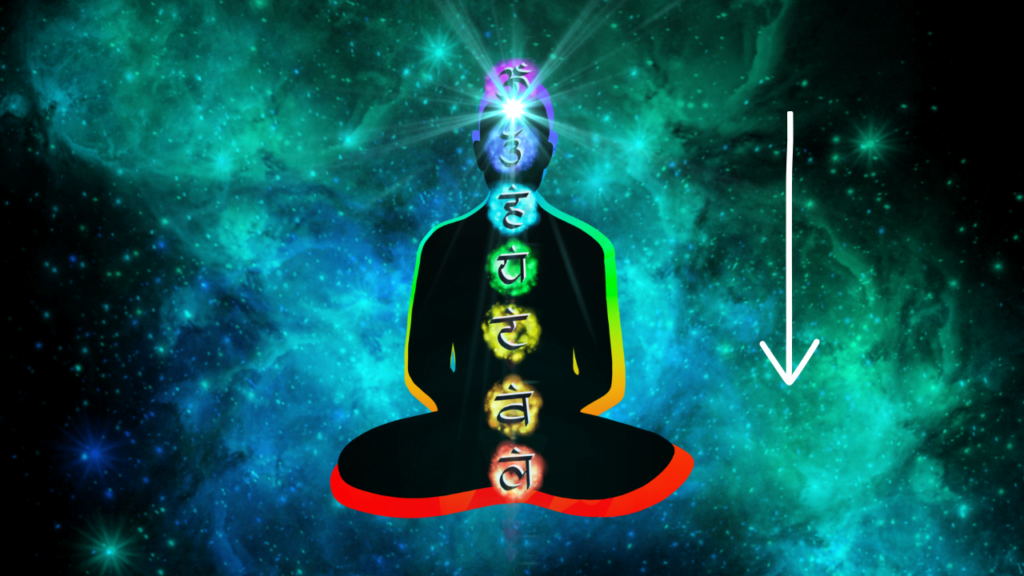
A top down kundalini awakening is when divine kundalini energy awakens in one of the upper most chakras of the body and moves its way down the body. Kundalini awakenings can begin in many ways and from many places in the body. Though most kundalini awakenings begins with a surge of divine energy starting from the root chakra and working its way up the body, this isn’t the only way. Top down awakenings beginning in the any of the upper chakras are entirely possible. > see my article “What Is A Spiritual Awakening” Top down vs bottom up awakenings The top down awakening Those that experience a top down awakening often have a natural preference or inclination towards understanding the divine from a higher consciousness, less grounded, more mental approach. Top down awakenings usually begin in one of the upper chakras such as the crown chakra, third eye, throat, or heart chakra and emanate out and down the body. When I had my top down awakening it felt as if my third eye was vibrating like crazy. A few moments later a profound feeling of warm energy starting emanating out of my heart chakra and shooting through the rest of my body. I suspect this was the kundalini opening my heart (that’s usually the chakra I struggle most with, as it’s hard for me to open my heart). That’s just one example of what a top down kundalini awakening can look like. The truth is that kundalini awakenings are entirely subjective and can happen in a near infinite amount of ways. The bottom up awakening Conversely, those that experience a bottom up awakening are most likely deeply practical and grounded individuals. Unlike top-downers, bottom-uppers don’t love to intellectualize life, instead they prefer living in the real world and not in their heads. These people approach life from a more earthly connected perspective. This is because bottom up awakenings begin in the root chakra and move upwards. The root chakra is the energy center at the base of your spine that grounds you to earthly reality. Bottom-uppers have a strong connection with their root chakra, keeping them grounded and stable. Bottom up awakenings may be more orgasmic in nature. As the next closest chakra up from the root is the sacral chakra which is responsible for sexual energy. As the kundalini energy passes up into this chakra, sexual pleasure may begin to shoot through the entire body. Issues that arise from top down awakenings Those that experience top down awakenings often don’t feel as grounded as those who have bottom up kundalini awakenings. This can lead to a feeling of anxiety due to detachment from the physical world. You’re consciousness may be so elevated during these experiences you can’t seem to get back down to physical reality again. This can be a very jarring experience, as it was for me the first time I had a top down awakening. If you face fear or mental blocks throughout this process it’s important to remember to surrender. Notice the fear and let go completely during these energy surges. How to manage a top down awakening First of all, know that there’s no right or wrong way to awaken or to have a kundalini awakening. Whether you’re a top downer or a bottom upper, you’re waking up as your were meant to. Know that despite the issues you may encounter, it’s all part of the process. The most important part of handing a kundalini awakening is surrendering to the process. You are being divinely guided, so trust in the process and allow the energy to flow through you. Let go completely, surrender, and allow as much as possible. After top down awakenings its a good idea to practice some grounding exercises such as mindfulness, exercise, walking in nature, and yoga. This will help you reconnect to physical reality. > see my article “How to Handle an Unexpected Kundalini Awakening”

What is a Top Down Spiritual Awakening? Read More »

Discover the 6 stages of awakening and find out where you are in your spiritual journey.

This quiz will take only 1 minute to complete